3D Printing for Casting
3D Printed Rapid Prototyping
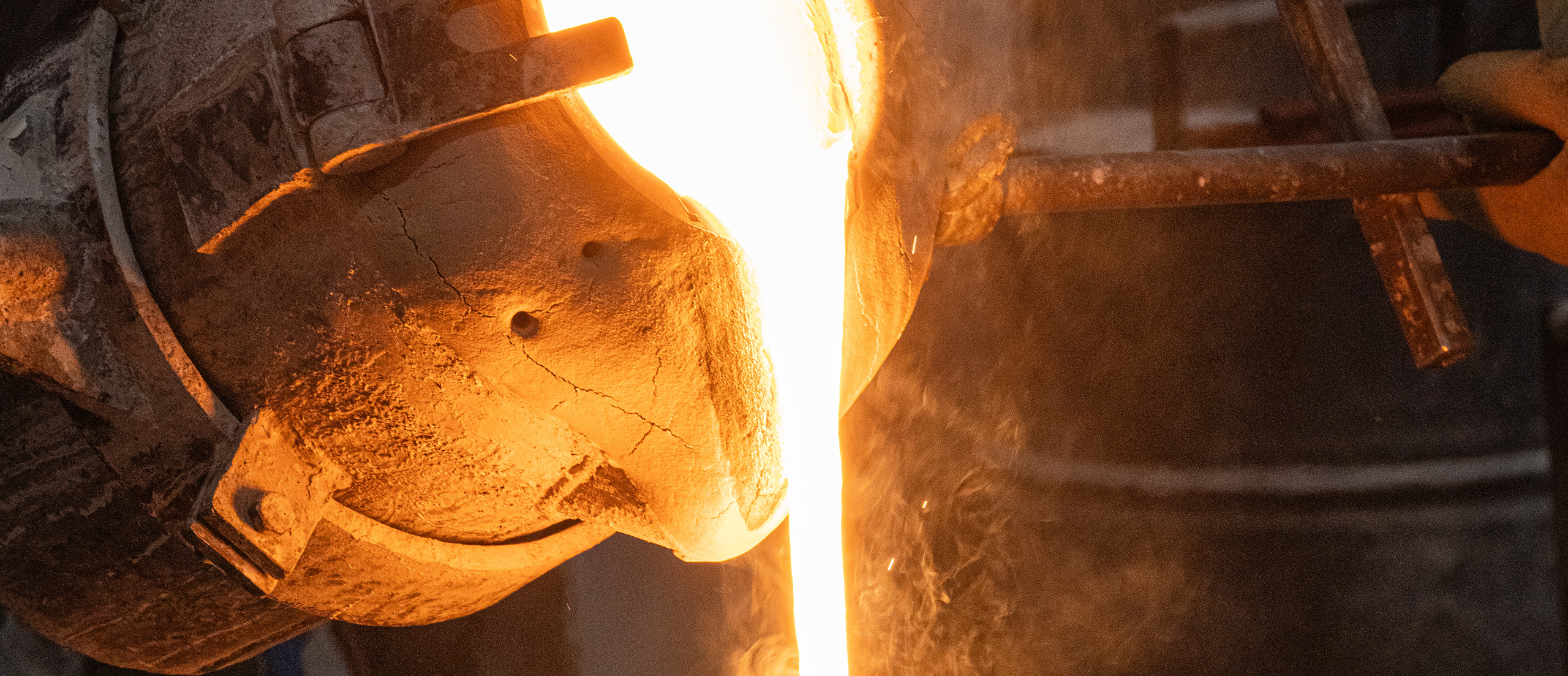
When you're developing a new product or feature, you need confidence it will perform as intended. Dean Group International supports your product development process with precision investment casting test parts, from single prototypes to production runs. All made in the UK at our ISO 9001:2015-approved foundry located in Manchester, with every part guaranteed UK-made and UK-certified.



What is 3D Rapid Prototyping?
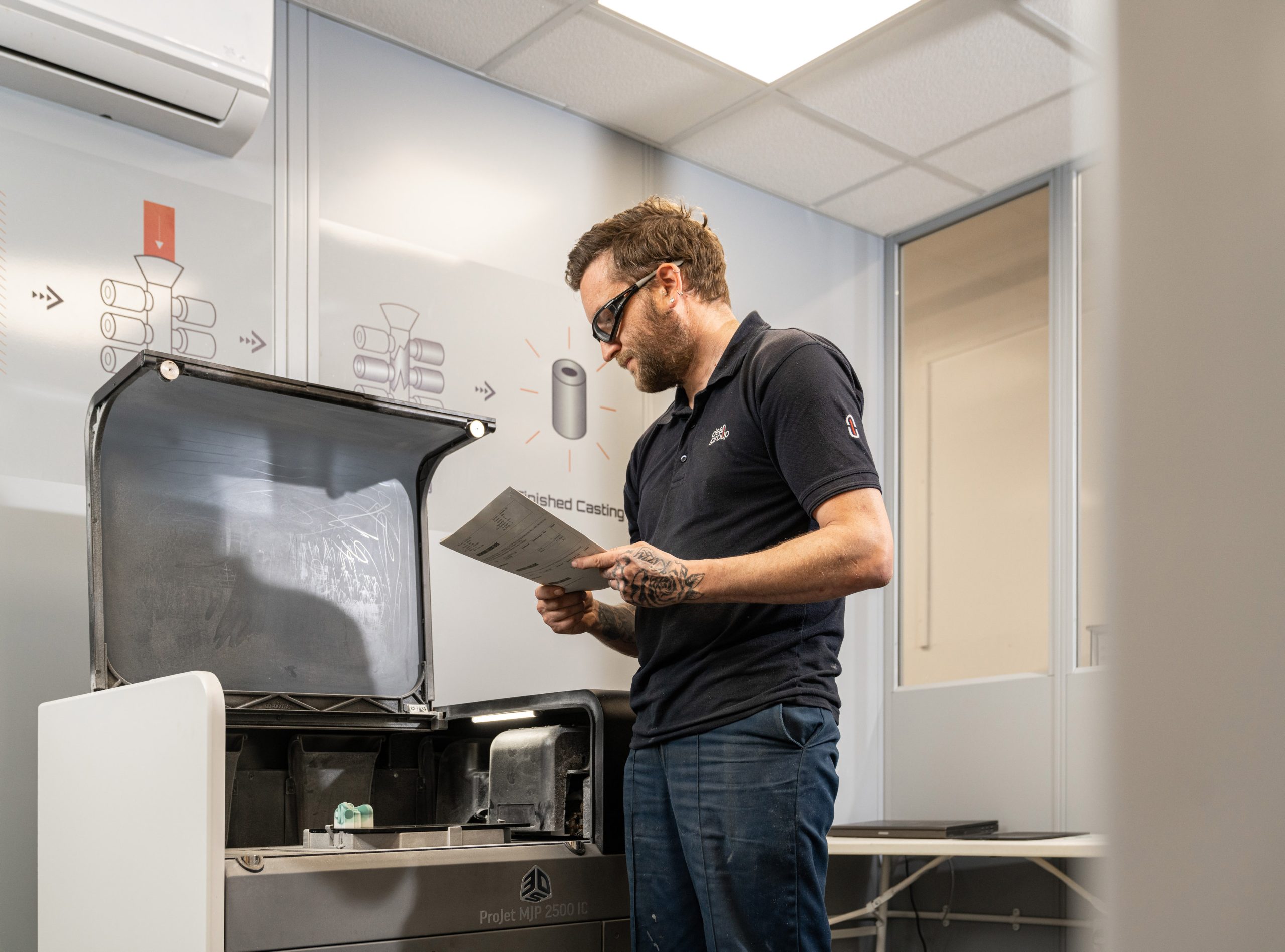
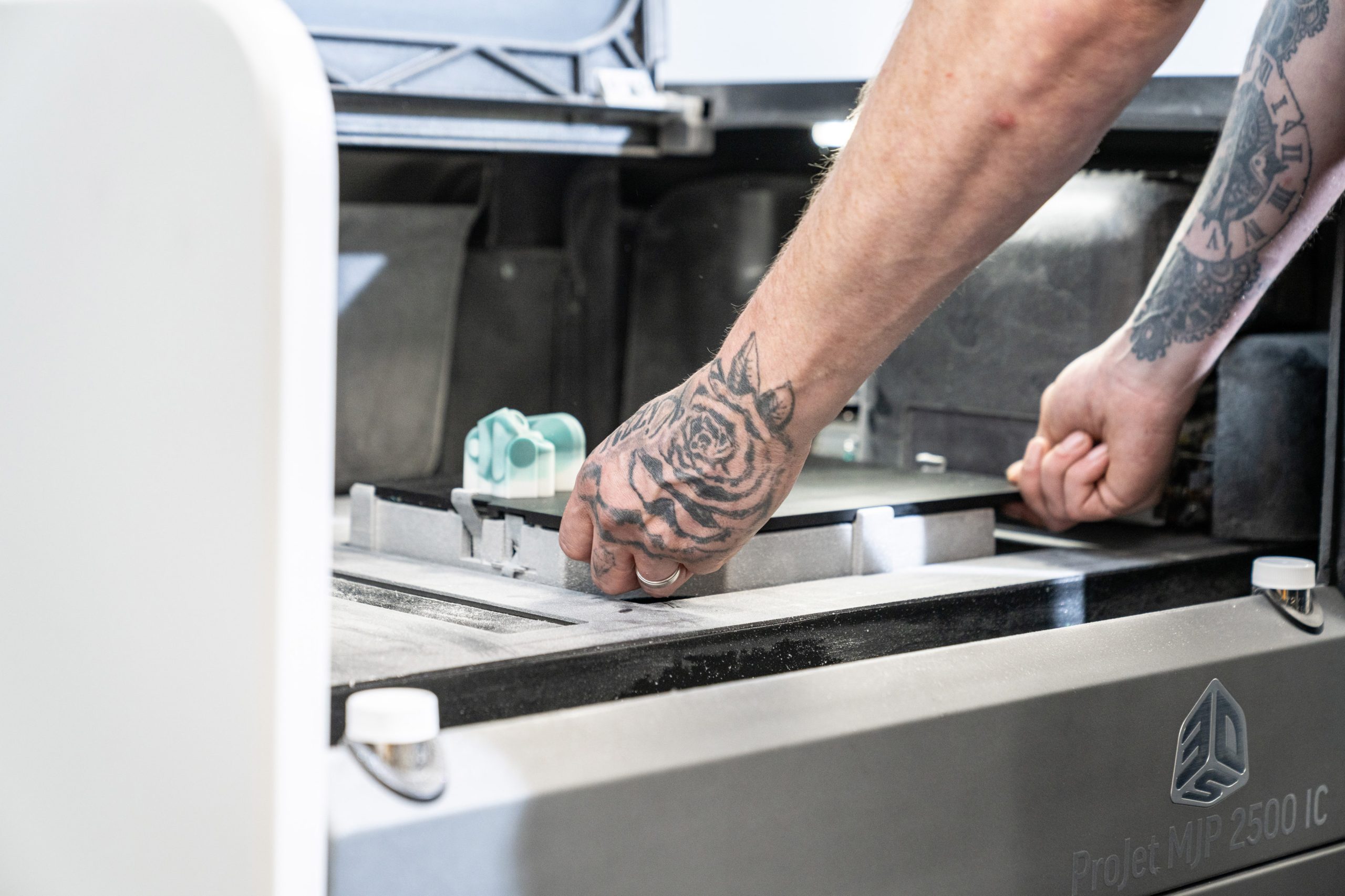
3D rapid prototyping is the process of creating accurate wax models directly from your digital CAD data using our ThermoJet wax printing system. Your design is sliced into thin layers and printed additively, producing a highly detailed wax pattern ready for casting.
Thanks to advanced CAD software and simulation tools, we can evaluate your design digitally before printing, reducing early design errors, improving performance, and ensuring the part is fully optimised for the casting process. Once validated, a physical wax prototype is printed for hands-on testing of form, fit, and functionality.
Unlike traditional machining from solid, which removes material to create a shape, rapid prototyping builds the part additively. This reduces waste, speeds up development, and allows for geometries that would be difficult or impossible with subtractive methods.
CAD Design Support
For us to assist in the manufacture of parts, we need a 3D model. We usually would expect a base 3D model to be supplied or a 2D drawing to reference. However, we understand not everyone has the technical knowledge or software tools to create 3D models suitable for 3D printing and investment casting which is why our team is on hand to help you with CAD design.
The ThermoJet Wax 3D Printing Process
Using your 3D model, we create a wax replica of your part, built in layers using ThermoJet printed technology. These are then printed at our metal foundry, often in a matter of weeks through this tried and tested process:
Step 1: Initial Design
The process begins with your digital designs or CAD files. If you don't have suitable 3D models, our experienced design team can create them for you using Computer-Aided Design (CAD) software, ensuring they're optimised for 3D printing and investment casting.
Step 2: Slicing and Model Preparation
Your CAD file is imported into specialised slicing software, which divides the model into thin layers (typically 0.002–0.003 inches thick) and prepares it for printing.
Step 3: Wax Printing Process
The wax material is melted and filled into a reservoir. The print head deposits thin layers of molten wax onto a build platform, moving horizontally and vertically according to the sliced model instructions.
Step 4: Layer Building
The ThermoJet printer builds the wax model layer by layer, with each layer fusing to the previous one as it cools and solidifies. This process continues until the entire model is complete..
Step 5: Support Structures
Where necessary, support structures are added during printing to ensure stability of overhanging or delicate features. These are easily removed once printing is complete.
Step 6: Post-Printing Finishing
After printing, the wax model undergoes post-processing to refine surface finish and eliminate imperfections, ensuring a high-quality prototype ready for the next stage.
Step 7: Final Inspections, Evaluations and Revisions
Thorough inspections are conducted to check the wax model for defects or errors. Dimensions, details, and functionality are carefully verified to guarantee accuracy against your original design specifications.
Step 8: Investment Casting Conversion
The validated wax model serves as the pattern for investment casting. As specialists in lost wax casting, we take your wax prototype and transform it into the finished metal component you need, allowing you to visualise and fine-tune product concepts.
Key Benefits of Rapid Prototyping
Dean Group International's 3D printing services, run by our dedicated and experienced team, provide the support needed for better design, testing, and manufactured products.
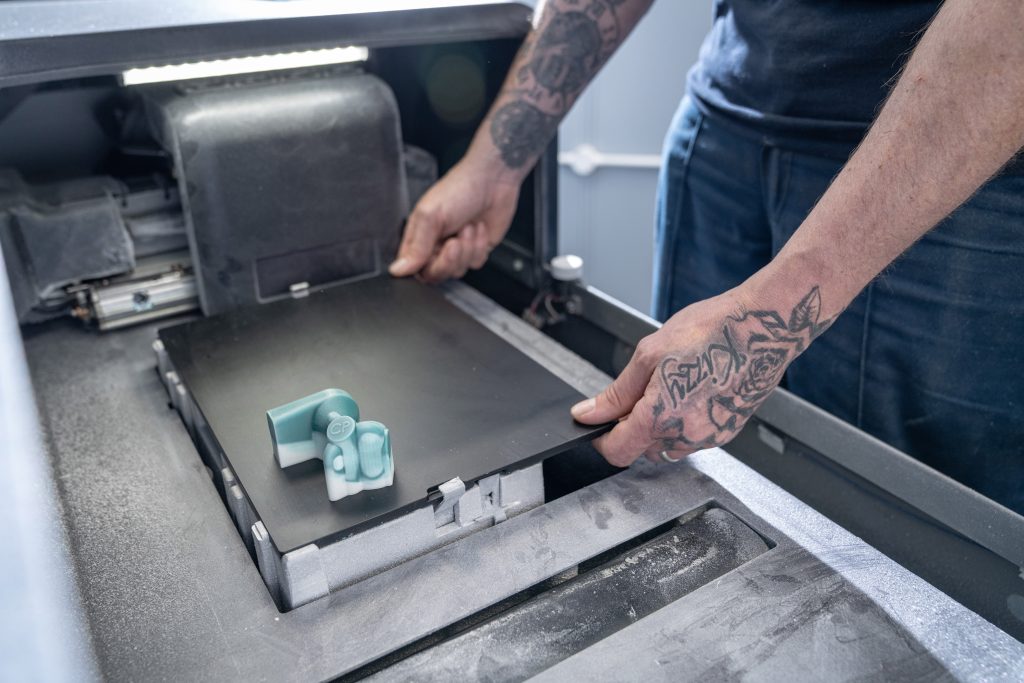
The flexibility of our offering is suitable for any project. Key benefits include:

Design Validation
Test form, fit, and function before committing to production

Cost-Effective
Eliminate expensive tooling and reduce development costs

Quick Iterations
Easily change and refine designs for faster development

Complex Geometries
Create innovative designs impossible with traditional methods

Reduced Time to Market
Accelerate product launches with rapid validation

Reduced Risk
Identify and fix issues early to avoid costly production mistakes
3D Printed Rapid Prototyping is one of the best ways to minimise development costs on iterations of your product. Testing the theory of your design before full product development allows you to reduce the development costs of your product, as it helps you avoid the chance of building something which doesn’t work or has snags. It also avoids any embarrassing and costly issues that customers may come across when your product launches.
Real-World Applications
In our recent success with the Cloud Cities Barcelona project, 3D printed rapid prototyping played a crucial role in achieving the project goals. The project required complex, multi-axis nodes with demanding tolerances, all delivered within a strict installation window. This innovative approach allowed us to overcome these unique challenges and contribute to creating essential components for intricate architectural design.
Quality Assurance & Inspection
Quality assurance doesn't end when your prototype is printed. At Dean Group International, we invest in cutting-edge inspection technology to ensure every part meets your exact specifications.
State-of-the-Art CMM Inspection Capabilities
We've added the Mitutoyo CRYSTA-Apex V 7106 CNC Coordinate Measuring Machine (CMM) to our inspection lineup, strengthening our ability to deliver high-accuracy inspection for complex parts across demanding manufacturing sectors.
Technical Capabilities:
- Measuring Range: 700 × 1000 × 600 mm working envelope
- Precision Accuracy: Down to ±1.7 µm for tight tolerance requirements
- Automated Operation: Fully programmable CNC system for consistent, repeatable measurements
- Multi-Probe Flexibility: Touch, scanning, and non-contact probe support for different measurement needs
- Environmental Compensation: Built-in sensors ensure consistent accuracy regardless of ambient conditions
Advanced Software & Analysis:
Our CMM system is enhanced with powerful software upgrades including:
- MiCAT Planner for efficient measurement planning and programming
- SP25 Scanning Probe with SM25-2 scanning module for detailed surface analysis
- Comprehensive Scanning and Profile Analysis Software for complex geometry verification
Whether you're developing aerospace components with demanding tolerances, railway parts requiring precise fitment, or architectural elements with a complex design, our CMM capabilities provide the verification and confidence you need.
Ready to Start Your Project?
Fill out the form below and someone from our team will be in contact with you.
Frequently Asked Questions
3D rapid prototyping is a manufacturing process that creates physical wax prototypes from digital CAD files using layer-by-layer printing technology.
Most 3D printed wax prototypes are processed at our Manchester foundry within a matter of weeks, depending on part complexity and current production schedule.
The cost of 3D rapid prototyping varies based on part size, complexity, material selection, and quantity. Because we eliminate expensive tooling costs, rapid prototyping is typically more cost-effective for small batches and one-off prototypes than traditional manufacturing methods. Contact us for a specific quote based on your requirements.
While we typically work from client-supplied 3D CAD files or 2D technical drawings, our experienced design team can create suitable 3D models for you if you don't have the technical capability. We offer a complete 3D model generation service to ensure your designs are optimised for printing and casting.
Rapid prototyping creates parts directly from digital files using additive manufacturing, eliminating the need for expensive moulds or dies. Traditional tooling requires creating physical moulds, which is time-consuming and costly upfront.
The wax model produced through ThermoJet wax printing serves as a high-quality prototype for further evaluation and testing. It can also be used as a pattern, where the wax model is encased in ceramic and then melted away, leaving behind a cavity for the final metal casting.
Our ThermoJet wax printing produces highly accurate prototypes with layer thicknesses of 0.002–0.003 inches. For clients requiring enhanced precision validation, we offer CMM inspection with accuracy down to ±1.7 µm using our Mitutoyo CRYSTA-Apex V 7106 system, ensuring parts meet demanding tolerance requirements.
Yes. One of the key benefits of rapid prototyping is the ability to quickly implement and test design modifications. Our team can work with you through multiple iterations, refining your design efficiently before final production commitment.
Specify acceptable CAD formats for files are STl, STP & Solidworks Files.
Contact Dean Group International for Your 3D Printing for Casting Quote
Brinell Drive
Northbank Industrial Park
Irlam
Manchester
M44 5BL

Registered in England VAT No: 146307478 Company Registration No: 1062820